
The Panch Kedar Yatra? Honestly, it’s one of those experiences that completely fills your soul. Tucked away in the absolutely majestic Garhwal Himalayas of Uttarakhand, these five ancient temples—Kedarnath, Tungnath, Rudranath, Madhyamaheshwar, and Kalpeshwar—are just soaked in centuries of devotion, mythology, and, frankly, the most breath-taking scenery you can imagine.
There’s this amazing legend that the Pandavas themselves built these shrines to finally get Lord Shiva’s forgiveness after the Kurukshetra war. The cool part is that each temple actually represents a different form of Shiva, which makes the whole trek feel so much more meaningful and symbolic.
Today, you see thousands of people—pilgrims and serious trekkers alike—making this journey. Everyone is looking for that rare mix of adventure, deep peace, and divine grace. With every single step, the colossal mountains, the tranquil valleys, and those sacred shrines hammer home the powerful, undeniable presence of Lord Shiva. It’s a humbling, unforgettable reminder of something much bigger than yourself.
1. Kedarnath: The Grand Beginning of the Yatra
So, the whole Panch Kedar Yatra generally kicks off with Kedarnath, right? It’s absolutely the most famous and, honestly, the most awe-inspiring of the five. Perched way up there at 3,583 meters, the setting is just dramatic—massive, snow-covered peaks completely surround the ancient stone temple, with the Mandakini River running peacefully close by.
Inside, the temple enshrines the hump-shaped form of Shiva, and believe me, it has this incredible, mystical aura that hits every visitor instantly. The trek itself, the 16 kilometers from Gaurikund, takes you through forests, over streams, and across some truly powerful mountain views. Yes, the climb is tough, but it feels so rewarding, especially that moment when you get your first glimpse of the temple silhouetted against the towering Kedarnath peak.
The energy there? It’s simply unlike anywhere else. The constant, booming chants of “Har Har Mahadev,” the ringing bells, and that icy mountain breeze make you feel instantly humbled and grateful. Kedarnath really sets the tone for the entire pilgrimage: grand, completely transformative, and emotionally uplifting.
2. Tungnath: The Highest Shiva Temple in the World
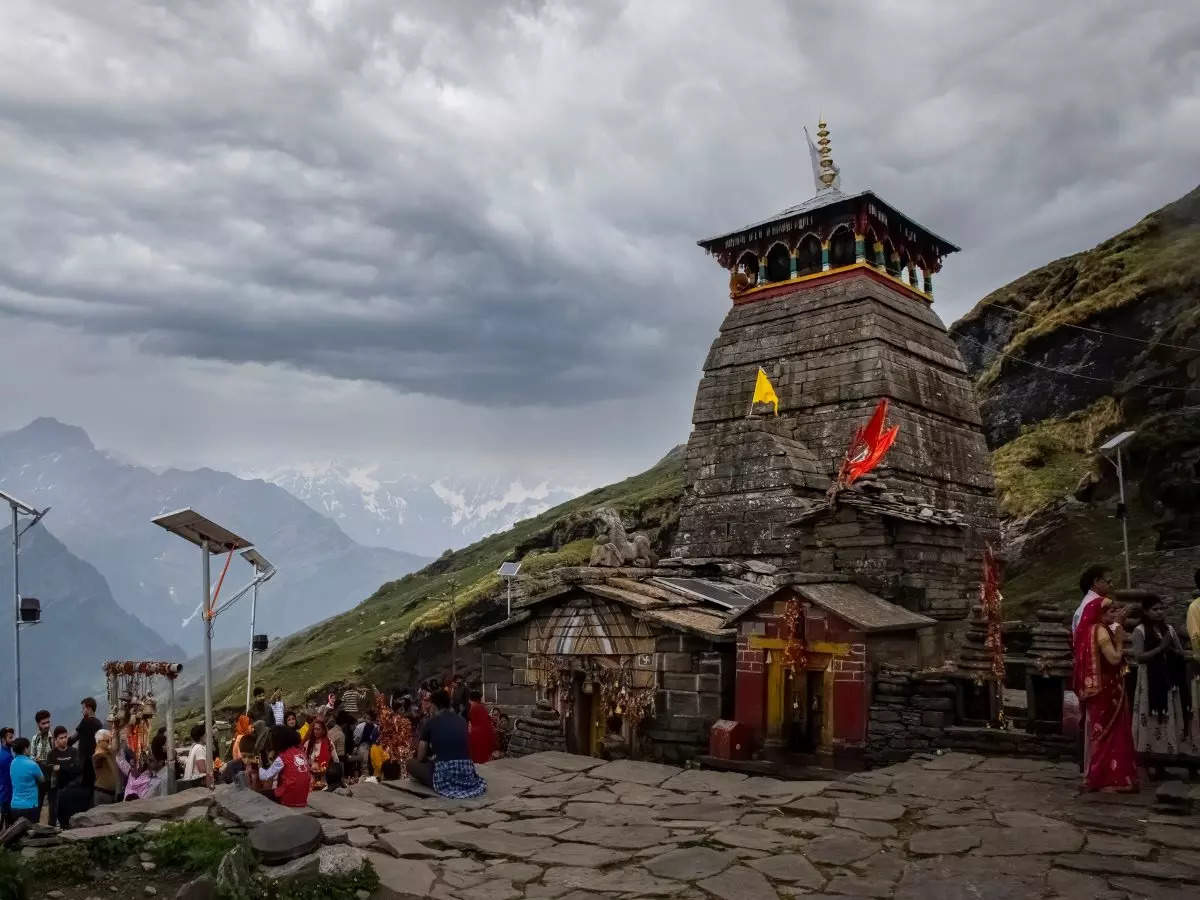
Okay, so after the intensity of Kedarnath, the journey takes you up to Tungnath, which is just incredible. It sits even higher, at 3,680 meters, and get this: it’s the highest Shiva temple in the whole world!
The trek starts from this place called Chopta, and seriously, they call it the “Mini Switzerland of India” for a reason—it’s all lush meadows and panoramic views. At Tungnath itself, Shiva is worshipped in the form of His arms. The stone temple feels so ancient and just completely at home among the surrounding mountains.
The hike to Tungnath is short—only about 3.5 kilometres—but you spend every single moment staring at the stunning mountain views of Nanda Devi, Trishul, and Chaukhamba peaks. If you go in spring or summer, the path is bursting with vibrant rhododendrons, which just adds so much colour to an already beautiful trail.
A lot of us choose to hike just a little further to Chandrashila Peak, which gives you one of the most breath-taking sunrises in the entire Himalayas. Honestly, the peaceful atmosphere and that pure mountain air make Tungnath an absolute must-visit on the Panch Kedar Yatra
\
3. Rudranath: The Mysterious Rock Shrine in the Wilderness
The third stop, Rudranath, is something else entirely. It feels so completely untouched, genuinely remote, and just profoundly mystical. This is where Lord Shiva’s face is worshipped, enshrined within a small stone temple as a naturally formed rock.
You definitely need some real determination to reach Rudranath, because the trek is long and often cited as one of the toughest of the Panch Kedar temples. But seriously, the journey itself is incredibly rewarding. You walk through silent, dense forests, cross high-altitude meadows, pass ancient shepherd villages, and encounter mountain springs that the locals treat as sacred.
The atmosphere at Rudranath carries such a deep, deep sense of calm. Surrounded by all those thick forests and towering peaks, the temple feels like a genuine hidden treasure, deep in the Himalayas. Watching the sun drop behind the distant snow-capped mountains up here is an experience that honestly stays with you forever. For many of us, Rudranath truly feels like the spiritual heart of the whole Panch Kedar Yatra.
4. Madhyamaheshwar: A Temple Blessed by Alpine Meadows
The journey then brings you to Madhyamaheshwar, sitting at 3,497 meters. This sacred spot is where they worship the navel, or the middle torso, of Lord Shiva. The path here is gorgeous—it winds through thick forests, past these charming little mountain villages, and into open meadows that literally glow golden as the sun goes down.
The temple itself is small and simple, beautifully crafted out of stone. But the real magic? It’s the scenery. The peaks of Kedarnath, Chaukhamba, and Neelkanth rise up so sharply right behind the temple, making for a truly breath-taking natural backdrop. A lot of people also hike up to Buda Madhyamaheshwar, a little shrine higher up, which gives you this absolutely grand, panoramic view of the entire Himalayan range.
The stillness, the cool mountain breezes, and the rhythmic chanting of prayers really make Madhyamaheshwar an absolutely unforgettable part of the
5. Kalpeshwar: The Final and Most Accessible Shrine
Finally, the whole Panch Kedar Yatra wraps up at Kalpeshwar, which is special because it’s the only temple open all year round! It’s nestled in the peaceful Urgam Valley at a relatively lower altitude of 2,200 meters, meaning it’s actually accessible even if you can’t manage the really long treks.
Here, Shiva is worshipped as His hair, located inside a cool, naturally formed cave shrine. The easy walk to Kalpeshwar takes you through terraced fields, apple orchards, and lovely, tranquil Himalayan villages. The sheer beauty of the Urgam Valley creates this wonderfully soothing environment—it feels absolutely perfect for meditation and reflection.
Kalpeshwar might be the smallest of the Panch Kedar temples, but honestly, its spiritual energy and those peaceful surroundings make it the most perfect, calming conclusion to the entire pilgrimage.
Conclusion
The Panch Kedar Yatra is not just a pilgrimage—it’s a transformative journey through some of the most beautiful and spiritually powerful places in the Himalayas. Each temple tells a story, each trail teaches patience, and each moment brings you closer to nature and the divine. Whether you’re a spiritual seeker, a trekking enthusiast, or someone longing for peace, the Panch Kedar Yatra offers an experience that stays with you forever.
From the majestic heights of Kedarnath and Tungnath to the serene valleys of Rudranath, Madhyamaheshwar, and Kalpeshwar, this pilgrimage captures the true essence of devotion, adventure, and inner peace. It is a journey every devotee of Lord Shiva dream of completing at least once in a lifetime.